
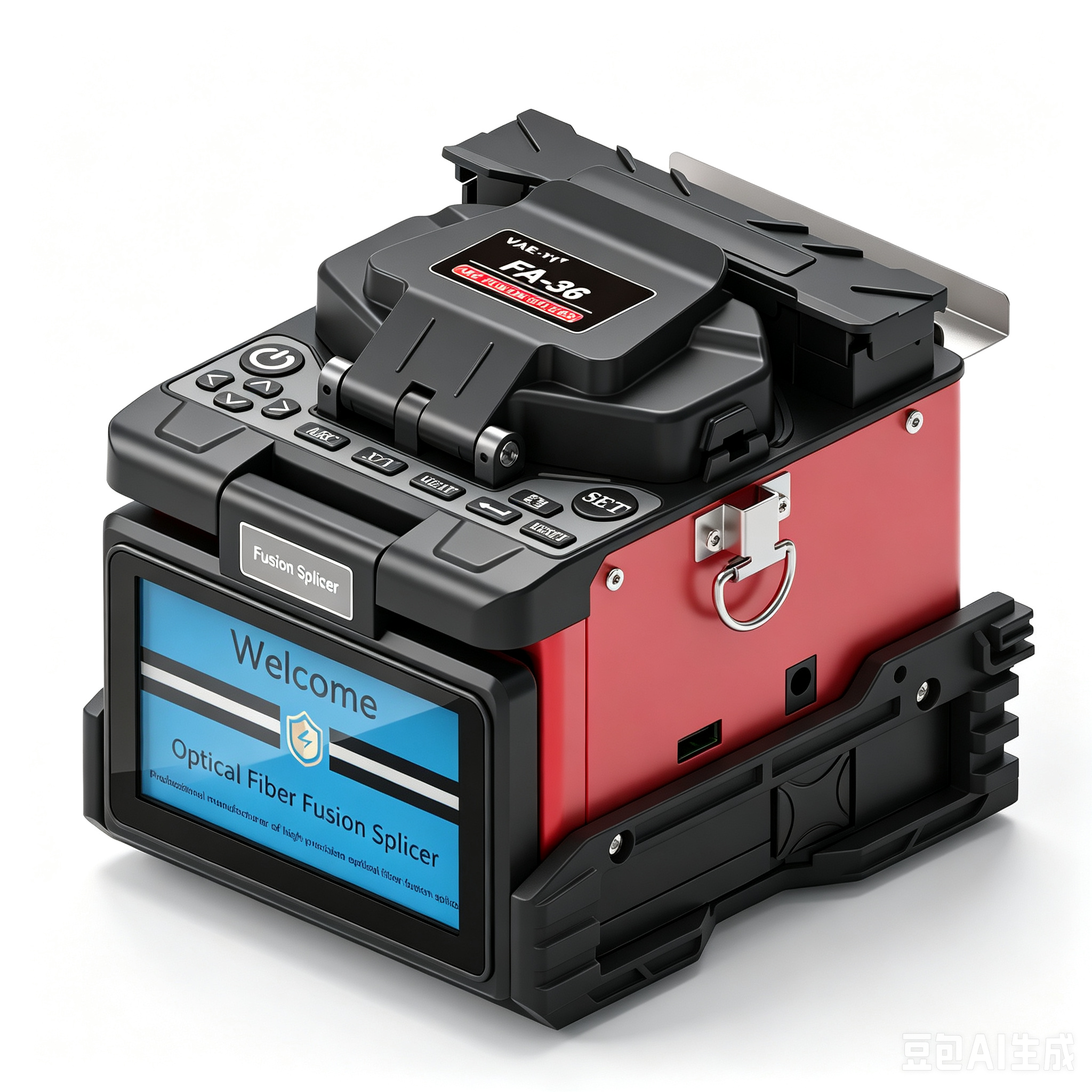
In the era of 5G, hyperscale data centers, and FTTH (Fiber to the Home) expansion, maintaining seamless, low-loss optical networks is more critical than ever. At the heart of this high-speed infrastructure lies a single, indispensable tool: the fiber optic fusion splicer.
Whether you are a network contractor, a telecommunications engineer, or sourcing equipment for enterprise networks, understanding how a fusion splicing machine works—and choosing the right one—is key to securing reliable data transmission.
What is a Fiber Optic Fusion Splicer?
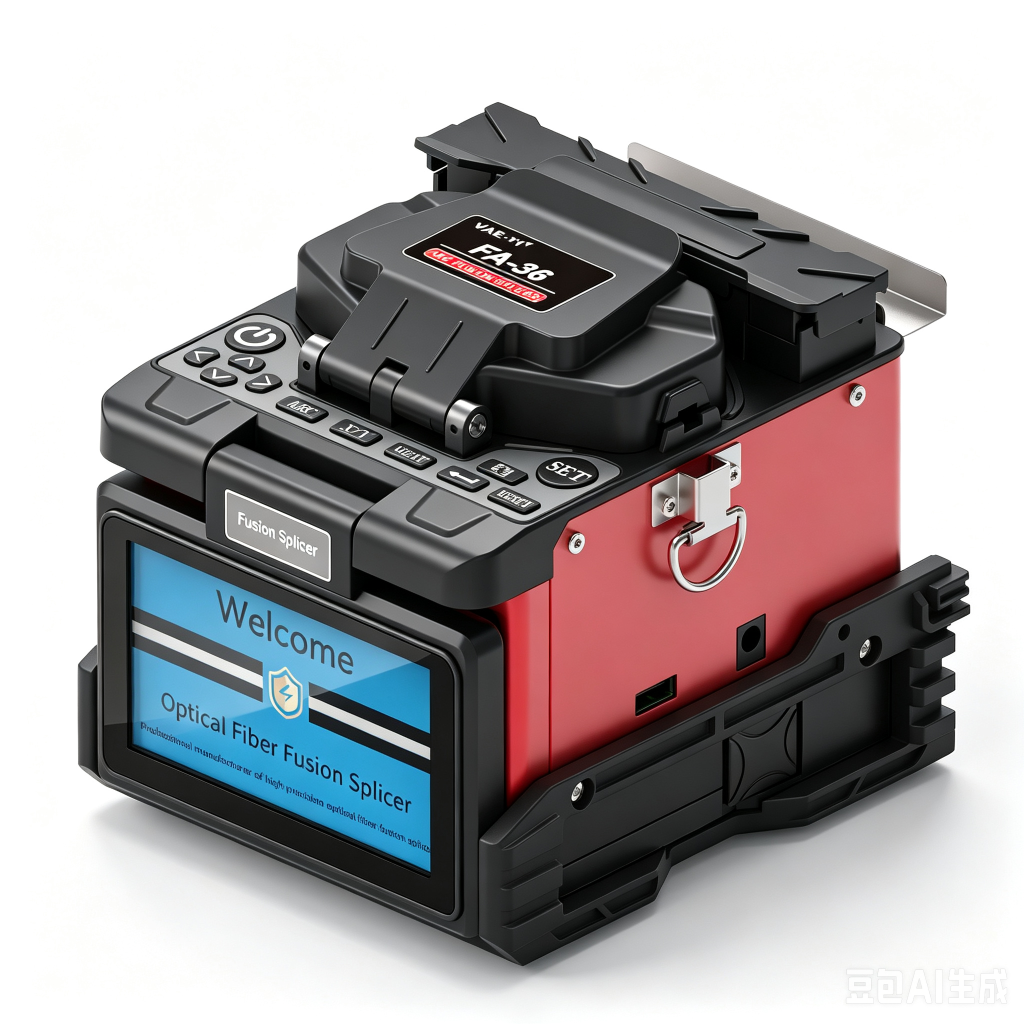
A fiber optic fusion splicer is a specialized, high-precision instrument used to join two optical fibers end-to-end using an electric arc. The goal of this process—known as fusion splicing—is to fuse the two glass cores together so perfectly that optical light signals passing through the fibers suffer minimal loss or reflection.
Unlike mechanical splicing, which simply aligns and holds fiber ends together with an index-matching gel, fusion splicing creates a permanent, continuous physical connection. This results in the lowest possible insertion loss (typically less than 0.02 dB for single-mode fibers) and the highest mechanical strength.
How Does a Fusion Splicing Machine Work?
The fusion splicing process is a masterpiece of micro-positioning and thermodynamics. Here is a breakdown of the core steps involved in making a perfect splice:
1.Stripping & Cleaning:Prep Phase。
First, the protective polymer coating of the optical fiber is stripped down to the glass cladding. The bare fiber is then meticulously cleaned with high-purity isopropyl alcohol (IPA) to remove any remaining microscopic dust or oils.
2.Cleaving:Precision Cutting。
The clean fiber is placed into a high-precision optical fiber cleaver. The cleaver scores and breaks the fiber to produce a perfectly flat end-face that is perpendicular to the fiber axis (ideally at a cleave angle of less than 0.5 degrees).
3.Alignment:Microscopic Positioning。
The cleaved fibers are placed into the V-grooves of the fiber optic fusion splicer. The machine uses built-in cameras and image processing software to align the fibers automatically on the X, Y, and Z axes.
4.Fusing (Arcing):The Melt。
Once perfectly aligned, the machine emits a brief, high-voltage electric arc between two electrodes. This arc melts the tips of the glass fibers and pushes them together to form a seamless, continuous joint.
5.Tensile Test & Protection:Final Reinforcement。
The splicer performs a mechanical pull test to verify the structural integrity of the joint. Finally, the delicate spliced area is covered with a heat-shrinkable sleeve and baked in the machine’s built-in heater for robust protection.
Core Alignment vs. Cladding Alignment: Which Do You Need?
When selecting a fusion splicing machine for your projects, you will generally choose between two primary alignment technologies. Choosing the wrong type can either over-engineer your budget or compromise your network performance.
| Feature | Core Alignment Fusion Splicer | Active Cladding Alignment Splicer |
| How it Works | Uses multiple cameras to locate and align the actual cores of the fibers dynamically. | Aligns the outer cladding (surfaces) of the fibers using fixed V-grooves. |
| Typical Loss | Ultra-low (approx. 0.01 to 0.02 dB) | Low (approx. 0.03 to 0.05 dB) |
| Best For | Long-haul telecom, backbone networks, 5G networks, and critical data centers. | FTTH (Fiber to the Home), LAN networks, security installations, and short-distance lines. |
| Price Point | Higher investment due to advanced multi-camera and sensor technology. | Highly cost-effective and budget-friendly for mass deployment. |
Why Industry Professionals Choose [Your Brand / Model Name]
For contractors and network operators, a splicer is not just a tool—it is a long-term investment. When evaluating products on the market, [Your Brand / Specific Product Model] stands out by addressing the major pain points installers face daily in the field:
- Exceptional Precision: Powered by state-of-the-art core alignment technology, our [Your Brand / Keyword] delivers consistent, ultra-low loss splices even when working with mismatched fiber brands.
- Rapid Splicing & Heating Cycles: Time is money. With a lightning-fast splicing time of [e.g., 6 seconds] and a heating time of [e.g., 15 seconds], our machine boosts field productivity by over 30%.
- Ruggedized & Weather-Resistant: Built for harsh environments, it features robust shockproof, dust-resistant, and waterproof protections, ensuring flawless operation from freezing mountain tops to hot, dusty deserts.
- Intuitive User Interface: Equipped with a high-definition touchscreen display that provides clear, crisp images of the fiber cores, making troubleshooting and operation simple for both novice and veteran technicians.
Invest in Your Network’s Future
Whether you are expanding a high-capacity enterprise data center or rolling out regional fiber networks, the quality of your joints determines the longevity and reliability of your system. A cheap splice is a ticking time bomb of network downtime. By investing in a premium fiber optic fusion splicer, you guarantee low loss, high return loss, and a network that is ready for the high-bandwidth demands of tomorrow.

Leave a Reply